
Inspection that looks behind the obvious
We check the visible growth and the likely hidden areas that feed it: wall cavities near plumbing, behind baseboards, around windows, and beneath flooring edges where moisture wicks.
Serving Des Moines, Iowa & surrounding areas
24/7 Emergency Response
Mold Remediation • Des Moines
Stop mold at the source with a clear inspection, contained removal, and moisture control that keeps it from coming back. Get a written scope and a realistic timeline before work begins.
Source First. Removal Second.
When someone searches for mold remediation Des Moines, they usually have one question: how do I make this safe and permanent without tearing up more of the home than necessary? Mold is a moisture problem first. The right remediation removes contaminated material, cleans what can be saved, and fixes the conditions that let spores grow.
In Des Moines, we often see mold after water intrusions that are easy to miss: a slow leak behind a vanity, seasonal humidity in a basement, or roof and flashing issues that only show up after a heavy rain. Homes in Beaverdale and other areas with older housing stock can hide leaks in plaster walls and older framing. River-adjacent neighborhoods such as River Bend and parts of the downtown/near-downtown corridor can also run into damp basements after wet weather, which can raise indoor humidity and keep materials from drying quickly.
Water Damage Restoration Des Moines focuses on straightforward, contained remediation: we identify the moisture source, isolate the work area, remove or treat affected materials based on industry-standard practices, and verify that conditions are dry before we close everything back up. If you are dealing with a recent leak or flood alongside mold, our Water Damage Restoration service can address the drying and dehumidification that mold prevention depends on.
Controlled Remediation
We check the visible growth and the likely hidden areas that feed it: wall cavities near plumbing, behind baseboards, around windows, and beneath flooring edges where moisture wicks.
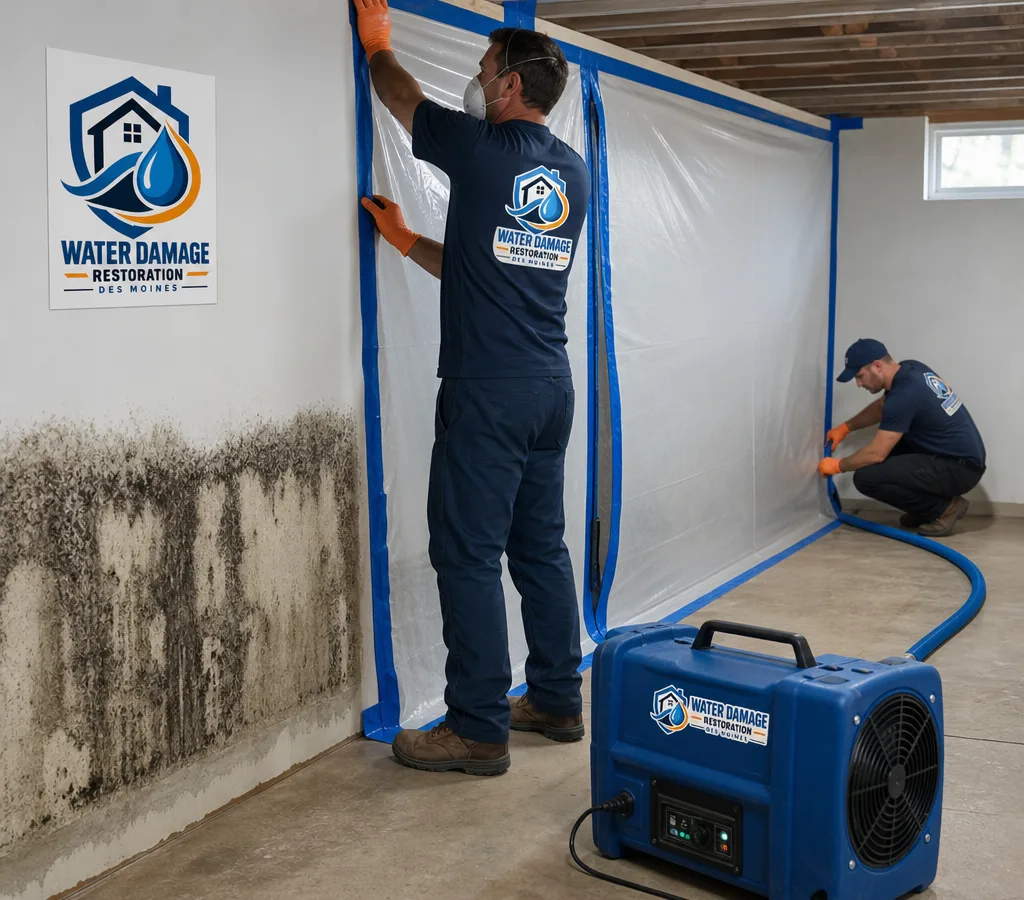
We use plastic barriers, controlled entry, and negative air when needed to keep spores and dust from spreading to clean rooms during demolition and cleaning.
Porous materials like drywall and carpet pad often require removal when contaminated. Semi-porous and non-porous surfaces can often be cleaned and treated when structurally sound.
We focus on drying, dehumidification targets, and practical fixes—venting, sealing, and repairs—so the same area does not re-grow after you repaint.
You get a written scope that states what is included, what is excluded, and what conditions would change the plan once materials are opened.
We protect floors and pathways, control debris, and keep work zones organized so you can still function in the house when feasible.
Source Control Before Cosmetic Repair
Mold remediation is not the same thing as spraying a cleaner on a stain. The stain is the symptom. A durable fix is a combination of source control, containment, removal or cleaning, and verification.
Source control: We start by finding what is keeping materials damp. That could be a plumbing supply line seep, a shower pan or grout failure, a roof penetration, poor bathroom exhaust, or basement humidity. If moisture is still present, cleaning alone will not hold.
Containment: When mold is disturbed, spores and fragments can become airborne. Proper containment limits cross-contamination into bedrooms, HVAC returns, and adjacent rooms.
Removal and cleaning: Materials are handled based on what they are. Drywall, insulation, and some composites are difficult to fully clean once colonized. Wood framing may be cleaned and HEPA-vacuumed, then treated where appropriate after it is dry. We avoid fogging as a primary strategy because it does not replace physical removal of contaminated dust.
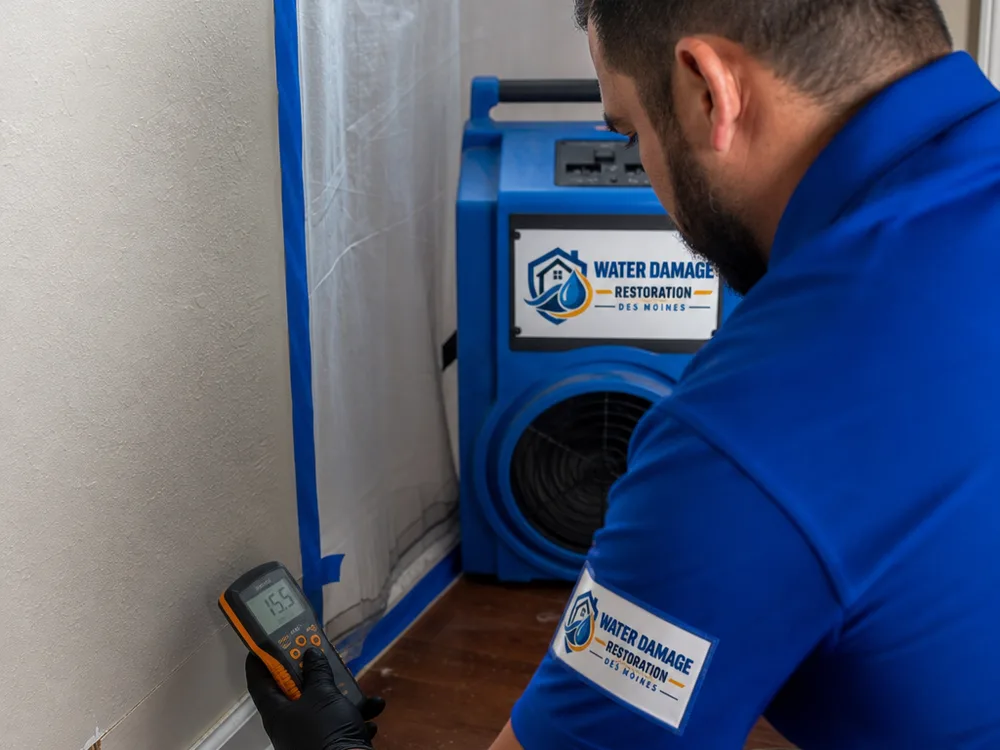
Drying and verification: We use moisture readings to confirm materials are back to a safe, dry condition before rebuild or cosmetic work. In Des Moines summers, high outdoor humidity can slow drying, so dehumidification matters as much as airflow.
If the mold is connected to a recent leak or a damp basement, stabilizing the space quickly is often the difference between a small, contained job and a larger demolition.
Measured Remediation Sequence
We document where growth is visible, check adjacent materials for moisture, and look for the conditions causing it. You will know what we found and what it means before we propose removal.
We define the work area, containment level, materials expected to be removed, and next steps after remediation, including drying time or repairs.
We isolate the area with plastic barriers and controlled access, protect pathways and contents as needed, and set air filtration and negative pressure when appropriate.
We remove unsalvageable porous materials, HEPA-vacuum and clean remaining structural surfaces, and address settled dust so spores are not left behind to spread later.
We dry materials to appropriate levels and verify with moisture readings. If we cannot reach dry conditions, we adjust the plan because closing up wet materials invites regrowth.
We review what was done, what to watch for, and practical prevention steps like ventilation improvements, humidity control, and maintenance checks.
Planning Your Remediation
Mold remediation in Des Moines typically ranges from about $800 to $6,000+, with small, contained areas on the low end and multi-room or basement projects that require heavy demolition, containment, and extended drying on the high end. A minor bathroom vanity or window-area remediation is often in the $800 to $2,000 range, while larger jobs—multiple rooms, crawl spaces, or widespread basement growth—commonly run $2,500 to $6,000+.
Your final price depends on the size and location of the affected area, what materials are contaminated, access and safety needs, the level of containment required, and whether active moisture is still present. Exact cost is confirmed after an on-site inspection and a written scope.
“We found mold behind the baseboards in our basement after a damp summer. The crew set up containment, removed the affected drywall, and explained what to change with humidity so it would not come right back.”
“They did a careful inspection instead of guessing. The written scope made it clear what was being removed and what could be cleaned, and the work area stayed isolated from the rest of the house.”
Homeowner Answers
Scheduling depends on the size and urgency of the project, but we prioritize active moisture situations and areas affecting bedrooms, nurseries, and HVAC pathways. If you suspect an ongoing leak or a damp basement that will keep feeding growth, getting an inspection quickly helps keep the scope smaller.
Many jobs can be completed while you remain in the home, as long as the work area can be fully contained and there is a safe path for debris removal. If the affected area is large, in multiple rooms, or tied into the HVAC system, temporary relocation may be recommended for comfort and exposure control during demolition and cleaning.
Drywall and insulation are porous and often need removal when mold is present because they are difficult to clean thoroughly once contaminated. Structural framing, concrete, and some other surfaces can often be cleaned and HEPA-detailed if they are sound and can be dried to an acceptable moisture level.
Yes, basements and crawl spaces are common locations for mold because they can stay humid and dry slowly after water intrusion. The remediation approach usually includes containment, removal of contaminated porous materials, HEPA cleaning, and a humidity and moisture plan so the space does not remain damp through the season.
Coverage varies by policy and by the cause of the moisture, and many policies limit mold unless it results from a covered sudden event, such as a burst pipe. If you are considering a claim, we can provide documentation of what we found and the scope performed so you have clear information to share with your insurer.
If possible, avoid disturbing the area, do not run fans that blow directly across visible growth, and keep doors to the affected room closed. If there is an active leak, shut off the water supply if safe to do so, and remove sensitive items such as paper goods and clothing from the immediate area to limit secondary contamination.
Preventing regrowth comes down to moisture control: fixing leaks, improving ventilation, and keeping indoor humidity in check, especially in basements during humid stretches. We use moisture verification as part of the job because closing up damp materials is a common reason remediation fails.
Inspect. Contain. Resolve.
Tell us what you are seeing and where it is showing up. We will inspect the area, explain the moisture source, and provide a written scope for mold remediation you can trust in Des Moines.