
A real inspection, not just a sample
We start by looking for moisture sources, visible growth patterns, and building-material conditions that affect where sampling should happen.
Serving Des Moines, Iowa & surrounding areas
24/7 Emergency Response
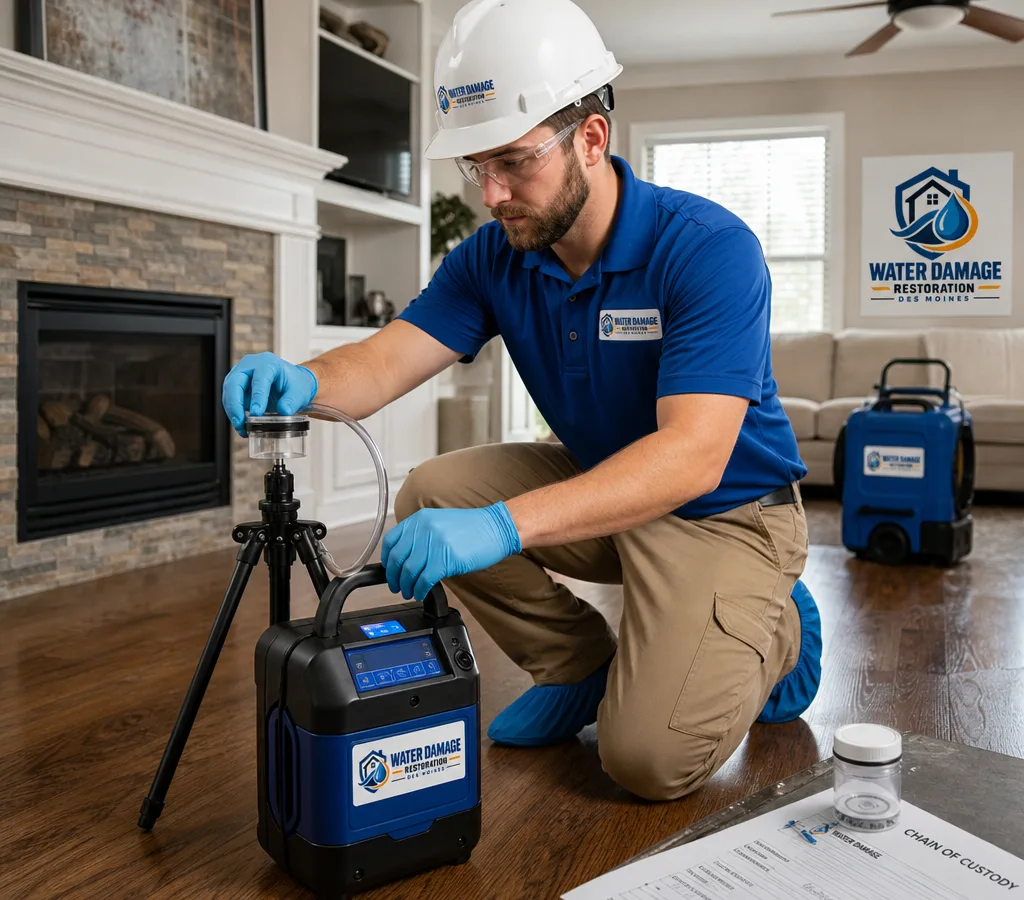
Mold Testing • Des Moines
If you smell something musty, have had a leak, or see staining that will not go away, testing gives you clear answers. We inspect, sample, and coordinate lab analysis so you can make the next decision with confidence.
Know What Is Happening
Mold problems in homes and small commercial spaces often start with moisture that is easy to miss: a slow plumbing seep, a past roof leak, damp basement corners after heavy rain, or high indoor humidity. Mold testing Des Moines homeowners request most often falls into two categories: confirming whether mold is present at all, and figuring out whether the air or a specific area has an elevated spore load compared with normal background.
Testing is especially useful when:
In Des Moines, basements and lower levels deserve extra attention because they can trap humidity and stay cooler than the rest of the house. That temperature difference can create condensation on cold surfaces, which is enough moisture to keep mold active even without a dramatic leak.
Inspection. Sampling. Answers.
We start by looking for moisture sources, visible growth patterns, and building-material conditions that affect where sampling should happen.
Air sampling, surface sampling, or both. The right method depends on whether you are verifying indoor air quality, checking a suspect material, or documenting a specific area.
Samples go to an accredited lab for analysis. You receive results that you can use for decision-making, property documentation, or a conversation with a contractor.
We explain what the results mean in practical terms and what to do next, including when professional remediation is appropriate and when simple moisture control is enough.
If a leak, flood, or ongoing moisture issue is still present, we help you prioritize what to address first so the problem does not keep feeding mold growth.
Building Context Before Lab Data
A good test plan starts with the building, not the kit. We look for likely reservoirs—drywall paper, insulation, carpet pad, and wood framing—and for moisture drivers such as active leaks, condensation, HVAC issues, or wet foundation areas. Then we choose sampling locations that can answer a specific question.
Common methods include:
Lab reports typically identify spore types and counts or categories, depending on the method. What matters most is context: where the sample was taken, whether moisture is still present, and whether the indoor results track with what is normal outdoors at the time of sampling. We walk you through that context in plain language.
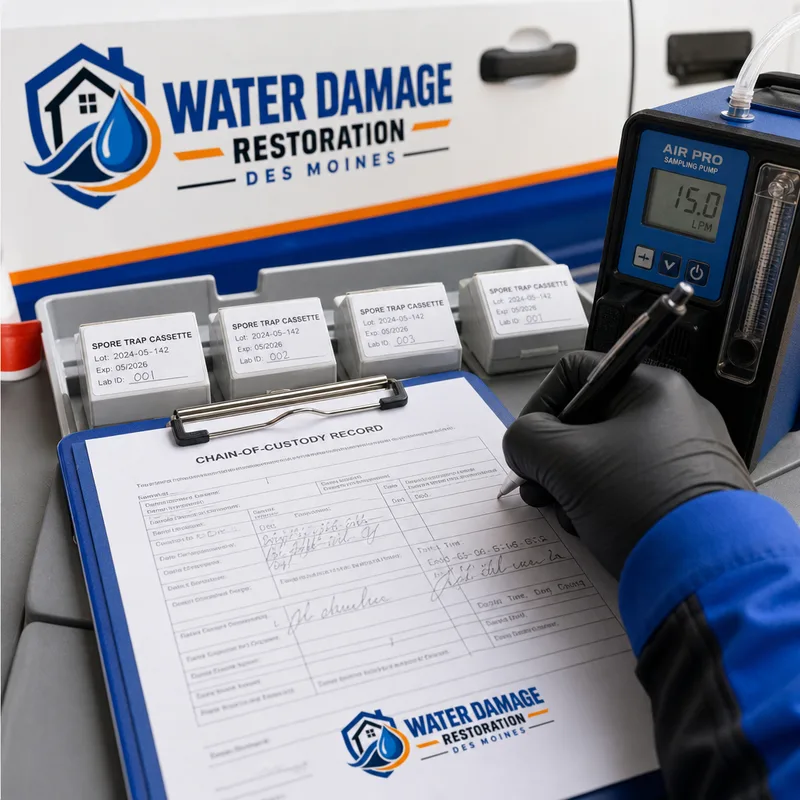
We ask what prompted the concern—odor, visible growth, recent leak, or a real estate timeline—and what you need the test to answer so sampling is not random.
We look for suspect materials, water staining, ventilation patterns, and humidity and moisture conditions that can explain why mold may be present.
We recommend air sampling, surface sampling, or a mix based on the building layout and concern area. Samples are labeled and documented for the lab.
Samples are sent to an accredited laboratory. Once results are returned, we share them with clear explanations and practical interpretation.
If results indicate a problem, we outline options: moisture correction, cleaning and containment considerations, or professional remediation. When an active leak or wet materials are present, stopping and drying the source comes first so testing results stay meaningful.
Planning Your Inspection
Mold testing in Des Moines typically ranges from about $250 to $750, depending on how many areas are sampled and whether you need air samples, surface samples, or both. A basic visit with a limited number of samples often lands toward the lower end, while larger homes, multiple floors, or targeted testing after a water event can push pricing higher.
Your final cost depends on sample count, access to suspect areas, whether baseline outdoor sampling is included, and how quickly results are needed. Exact pricing is confirmed after the on-site inspection and a clear sampling plan.
Protect Useful Test Data
Small changes in a home can change air sample results, so a little preparation helps keep the data useful.
Request Emergency ServiceHomeowner Answers
Scheduling depends on current demand, but the on-site inspection and sampling are typically completed in a single visit, and lab results commonly return within a few business days. If your situation is time-sensitive, tell us upfront so we can discuss the quickest responsible sampling plan.
Not always. Air sampling helps evaluate what occupants may be breathing and whether a space has elevated spores compared with a reference sample, while surface sampling helps confirm what a visible spot or suspect material actually is. Many homes benefit from a mix, but the right choice depends on whether the concern is odor, symptoms, visible staining, or a known water event.
Yes, but we treat that as a targeted decision rather than a default. If the building history and inspection suggest hidden moisture, we can discuss limited, careful access points and the pros and cons before any invasive step is taken.
Yes. You will get clear guidance on what the results mean and what actions make sense, including controlling the moisture source, cleanup considerations, and when professional remediation is appropriate. If the underlying issue is ongoing dampness or wet materials, solving that moisture problem is what prevents mold from coming back.
Often, yes, when you need documentation, when the affected area is larger than a small spot, or when you want to understand whether indoor air is affected beyond the visible area. Testing can also help guide the scope of work so you do not remove more material than necessary.
Testing provides data about what was found in the sampled locations at that time, but it is not a medical clearance. If occupants have health concerns, use the results as one input and discuss symptoms with a healthcare professional; our role is to identify likely building-related contributors and practical steps to reduce exposure.
Inspect. Sample. Understand.
Tell us what you are seeing or smelling and what changed in the home recently. We will recommend a sampling plan that fits the situation and provide lab-backed results with straightforward next steps.