
Source control and safety-first setup
We help identify where the water is coming from, isolate the affected areas, and address electrical and slip hazards before major equipment is placed.
Serving Des Moines, Iowa & surrounding areas
24/7 Emergency Response
Water Damage Restoration • Des Moines
Stop the spread, dry the structure, and document the loss with a clear scope of work for your home or business. Licensed, insured technicians respond fast and focus on what prevents lasting damage.
Extract. Measure. Dry.
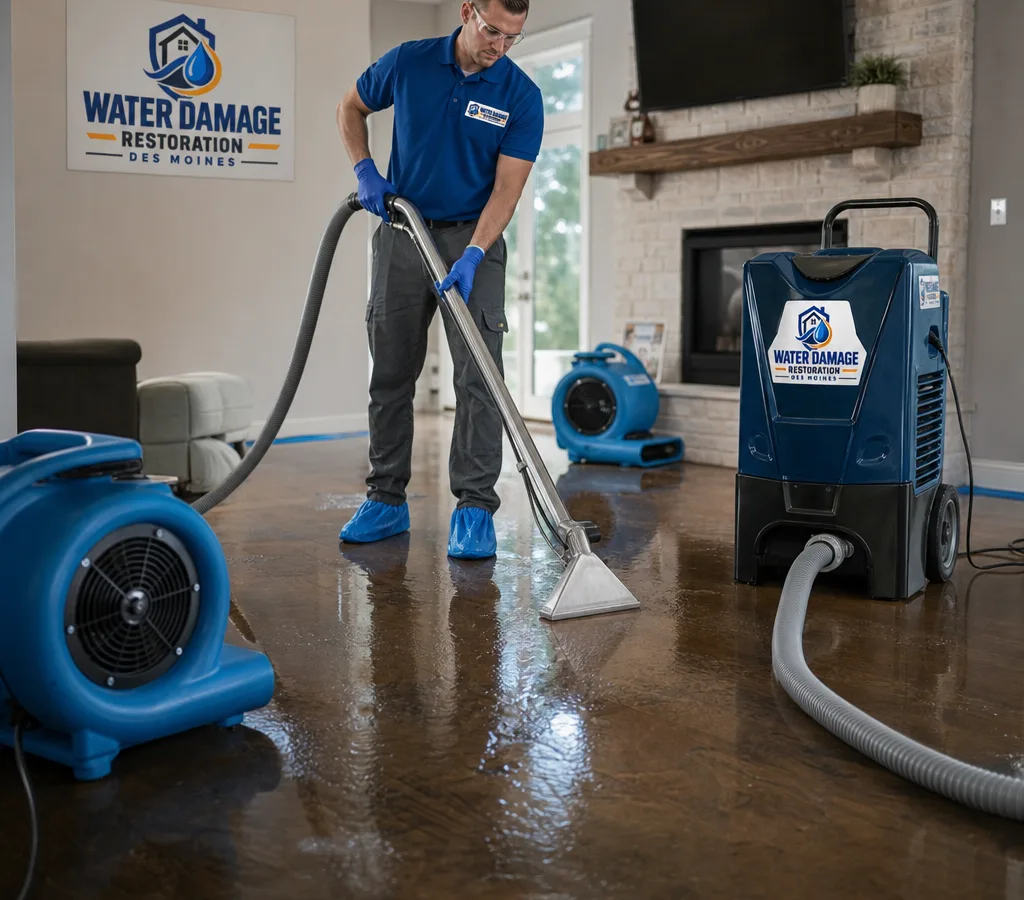
Water damage in Des Moines can turn from a wet carpet into swollen trim, cupped hardwood, and hidden moisture behind baseboards in a hurry. The first goal is simple: stop the source when possible, remove standing water, and begin controlled drying so the building materials do not stay wet.
At Water Damage Restoration Des Moines, we handle the full water-damage response for residences and commercial spaces: inspection, moisture mapping, water extraction, structural drying, and the documentation that supports insurance conversations. If you are dealing with a burst supply line, a water heater leak, an overflowing fixture, or storm-related water intrusion, the right next step is a professional assessment with a written plan for dry-out and next repairs.
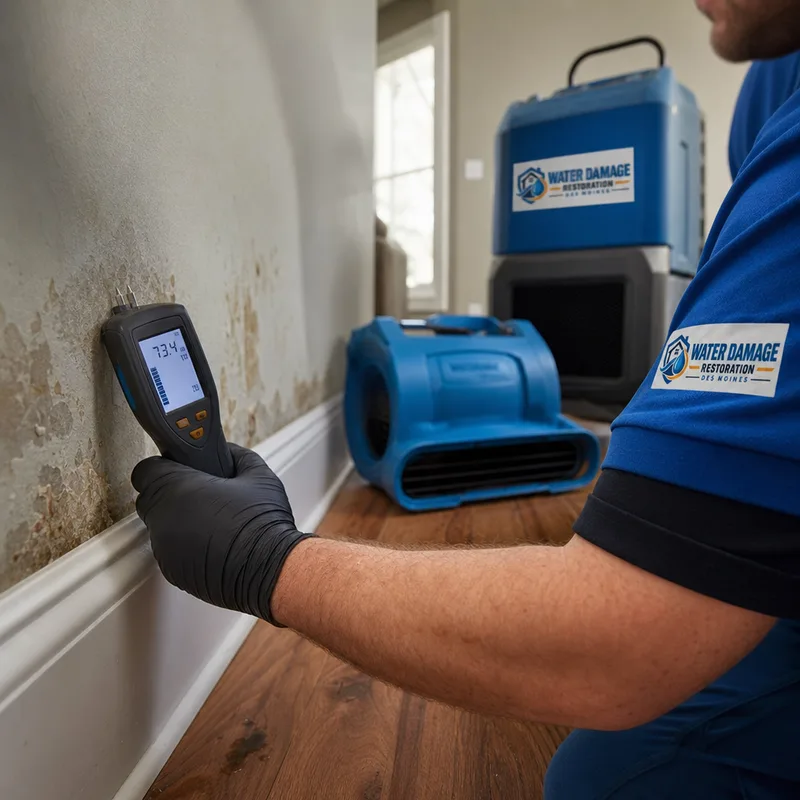
Des Moines properties vary from older homes with plaster and multiple remodel layers to newer builds with open floor plans and engineered materials. Those differences matter when you are trying to dry framing cavities, subfloor layers, and wall assemblies without causing secondary damage. Our technicians use moisture meters and targeted drying equipment to bring the affected area back to a dry standard you can verify, not guess.
Immediate Response Priorities
We help identify where the water is coming from, isolate the affected areas, and address electrical and slip hazards before major equipment is placed.
Standing water is removed first, then we evaluate materials like pad, drywall, insulation, and baseboards so removal is limited to what cannot be dried safely.
Drying is guided by readings from affected materials. You get clear notes on what was wet, what was done, and when dry targets were met.
We tailor cleaning steps to the water category and exposure. When contents are affected, we prioritize what can be cleaned and what needs separation.
We document conditions, equipment placement, and progress so the claim process is supported by job notes rather than memory.
Downtown condos, multi-tenant buildings, and older neighborhoods can have tight parking and entry limitations; we plan equipment moves and check-ins accordingly.
Measured Drying, Not Guesswork
Effective restoration follows building-science basics: remove liquid water quickly, then control temperature, airflow, and humidity so evaporation happens without pushing moisture deeper into materials.
A proper assessment usually includes:
In Des Moines, seasonal swings can complicate dry-outs. Cold-weather conditions often mean the building is closed up and heating is running, which changes how quickly air can hold moisture. Summer humidity can slow evaporation if dehumidification is undersized. The fix is not guesswork. It is equipment sized to the space and regular monitoring until materials are back to acceptable moisture levels.
If you are comparing providers for water damage Des Moines work, ask how they verify dryness, how often they re-check readings, and what criteria they use to decide whether drywall, insulation, or flooring can stay.
Measured Restoration Sequence
We inspect the affected areas, take moisture readings, and outline what needs extraction, what can be dried in place, and what must be removed for safety or contamination reasons.
We remove standing water, pull saturated materials when necessary, and set up containment where it helps protect unaffected rooms and contents.
Air movers and dehumidifiers are placed to match the layout and materials. We return to monitor readings and adjust equipment so drying stays on track.
Depending on the water type and exposure time, we clean affected surfaces, address odor sources, and set practical next steps for contents and soft goods.
You receive clear job notes and photos. If repairs are needed after mitigation, we explain what is next so you can make decisions with the right information.
Planning Your Restoration
Most water damage restoration in Des Moines typically ranges from about $900 to $4,500 for a small to mid-size affected area with standard drying, while larger losses with multiple rooms, contaminated water handling, or significant demolition can run $6,000 to $20,000+.
Final pricing depends on how far the water traveled, the category of water, the materials involved—hardwood, tile, drywall, and insulation—access constraints, and how many days of drying and monitoring are required. The exact cost is confirmed after an on-site inspection and moisture mapping so the scope matches the real conditions.
“We had water under the kitchen flooring that didn't show up until the trim started swelling. They mapped moisture, set up drying, and kept us updated on what was still wet and what was back to normal. The documentation made the insurance conversation much easier.”
“Fast response and straightforward communication. They contained the wet area, pulled only what needed to come out, and the equipment placement was clearly planned instead of random fans everywhere.”
Homeowner Answers
You should start water removal and drying as soon as it is safe because moisture can move into drywall, trim, and subfloors quickly. If water is still coming in or there is any electrical risk, address source control and safety first, then begin extraction and dehumidification to limit swelling, warping, and hidden moisture pockets.
Shut off the water supply if the leak is from plumbing, avoid using outlets or rooms with wet electrical components, and move small valuables out of the wet area if you can do so safely. If you can, take a few photos of visible damage for documentation and avoid running the HVAC if it is pulling in damp air from a flooded space.
Some materials can be dried in place, but removal is sometimes the safest and fastest route, especially when insulation is saturated or contaminated water is involved. We decide based on moisture readings, the type of material assembly, and the water category, then document why removal is recommended when it is needed.
Drying and monitoring commonly take 3 to 5 days for many residential losses, but it can be shorter for small clean-water events or longer when multiple rooms, dense materials, or high humidity conditions are involved. Repairs after mitigation vary widely based on the amount of demolition and the finish materials being restored.
Yes. We provide job notes and photos that show affected materials, equipment placement, and drying progress so you have clear support for the claim process. Coverage decisions are made by your carrier, but good documentation reduces confusion about what happened and what work was performed.
Yes. We respond to water damage in offices, retail spaces, and multi-tenant properties, with attention to access coordination, containment, and keeping unaffected areas usable when possible. The scope is built around the building layout, after-hours constraints, and the materials that are actually wet.
Local Buildings Need Local Planning
Water damage does not behave the same way in every building. In Des Moines, the construction style and access constraints in the area often affect how quickly we can set up equipment and what materials are at risk.
In Beaverdale and other neighborhoods with many mid-century homes, you often see older plaster walls, mixed flooring layers from remodels, and tighter mechanical chases. That can make moisture harder to track without careful mapping. In Sherman Hill, older structures and varied renovations can mean multiple subfloor types or older trim profiles that need careful removal and reinstallation planning. Downtown and the East Village include condos and mixed-use buildings where elevator access, shared corridors, and building rules matter for staging equipment and managing noise. On the South Side, many properties have finished basements where water can travel under flooring and into wall plates before it is visible.
Water Damage Restoration Des Moines explains the way we scope, document, and stabilize water losses for both residential and commercial clients.
Extract. Dry. Document.
Tell us what happened and what areas are affected, and we will provide a fast on-site assessment with a written scope for cleanup, drying, and the next steps needed to protect the property.